
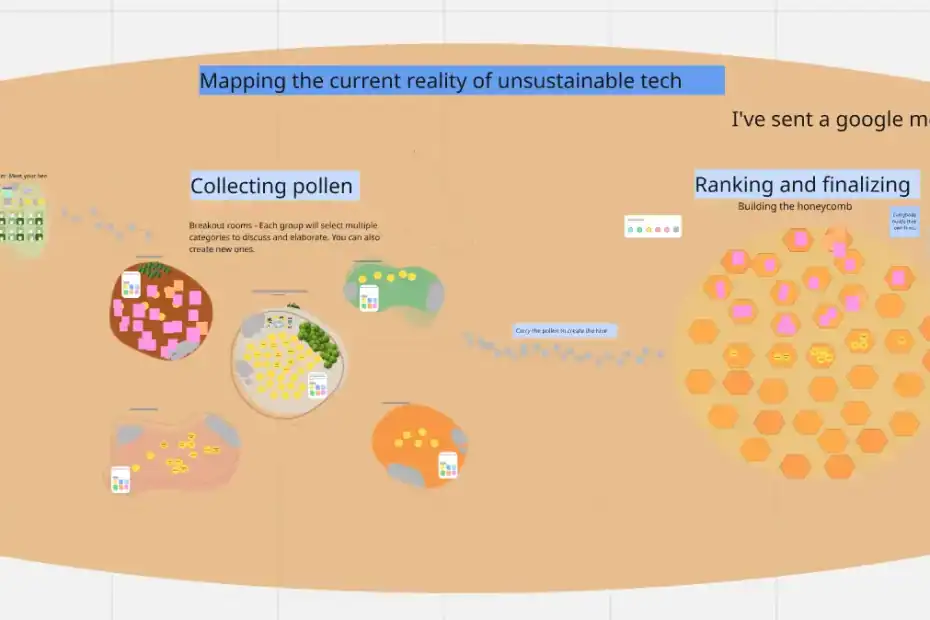
On September 10th we kicked off our workshop series Mapping the reality of Unsustainable Tech. In this first session CATs gathered to discuss bees and co-create a systems map of the current tech industry.
Our workshop focussed on defining the categories that contribute to this unsustainable nature. The initial idea was to just build 12 categories, but as with any systems thinking workshop, the workshop evolved into something bigger and more beautiful. We used a Miro dashboard to co-create the current reality. Miro gave us the ability to post sticky notes and have deeper conversations.
Why did we have bees and their hive as a metaphor?
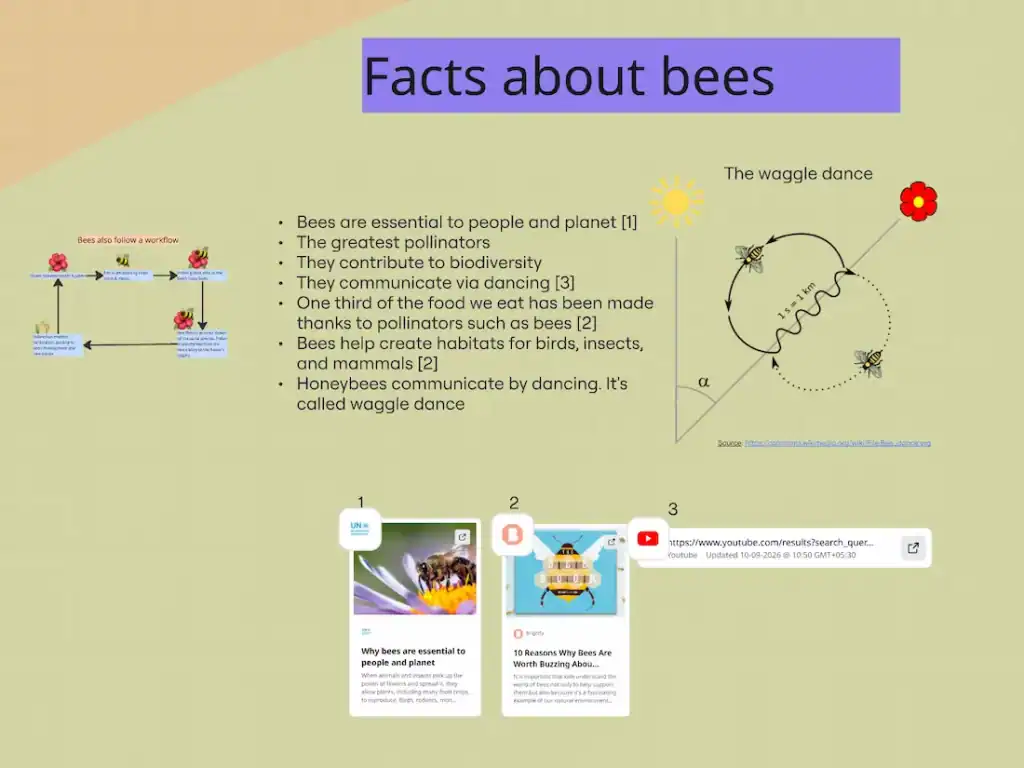
Bees evolved from ancient predatory wasps that lived 120 million years ago [1]. Pollinator numbers have reduced by almost 25% [2]. The declining population of bees poses a real threat to agricultural production all over the world. [2].
For millions of years bees have played a vital role in the biodiversity of our planet through pollination. Everything depends on their survival. With anthropogenic climate change, their survival is threatened.
Having the image of bees and their hive was thus ideal to bring to our attention the importance of bringing climate action into tech.
When participants met their bees
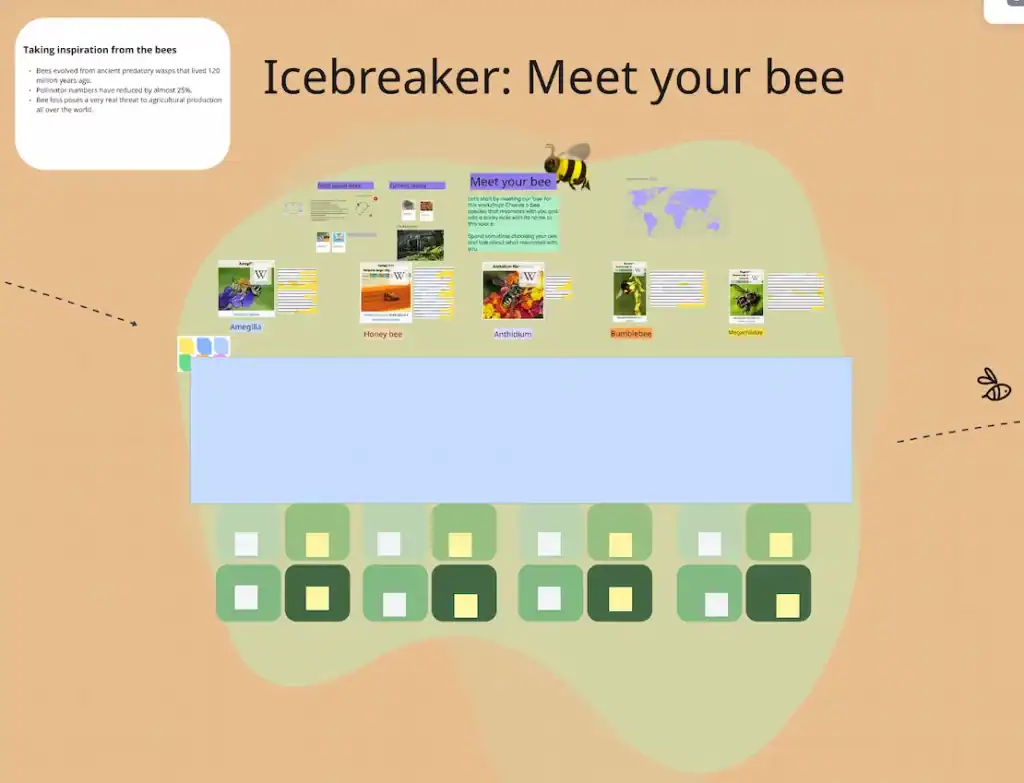
There are 20,000 species of bees and we spent a time to expand our understanding of them and why they were intelligently able to survive for millions of years. This formed our icebreaker activity where everyone picked one species from a set of five and spoke about why they picked it. It was an interesting conversation revealing personal connections between the participants and our chosen bees.
The garden of unsustainable tech

Carrying the bees that we selected, we entered the Garden of Unsustainable Tech where we collected existing categories and – through our conversations – added new ones. We had elaborate discussions and new categories emerged,adding new layers to the systems map:
- Capitalism and growth: Our current economic model demands endless growth, on a planet with finite resources.. We follow a linear cycle: we pull resources from the Earth, rapidly produce products, consume them, and throw them away.
- Tech-driven authoritarianism, fascism and mass surveillance: Technology in the hands of the selected few, what we call Big Tech, has transformed it into a tool of control. Mass surveillance allows governments and corporations to track, categorise, and predict citizen behaviour at scale, creating the infrastructure necessary for authoritarian regimes and enabling technologies of oppression. Technologies such as social media are becoming critical points of power concentration, making unprecedented amounts of private data vulnerable to abuse by powerful actors.
- Inadequate governance structures: The current laws, ethics, and governance are not able to keep up with the rapid development of tech. This allows powerful companies to deploy technologies without the necessary ethical checks or regulatory frameworks in place.
- Local autonomy and solutions to build/run technologies: The centralisation of scalable, global solutions often ignores the brilliance found at the local level, which otherwise would have empowered local communities to build, run, and maintain technologies appropriate for their specific needs and ecosystems.
- Extractivism and mining: Our devices are built on a global extraction economy – mining minerals and raw materials in vulnerable ecosystems, often under devastating human and environmental costs. We are simply accelerating the pace of extraction to keep up with exponential demand.
- Planned obsolescence: Technologies are built for capitalist growth rather than human needs. Planned obsolescence, whether in hardware or software, is a built-in feature of models that prioritise constant replacement and growth over durability, wasting immense resources in the process.
- Nature-culture divide / Loss of local knowledge and culture: Local knowledge systems and traditional ecological wisdom that contain the deep understanding of how humans coexist with specific environments are often overtaken by standardised, mass-produced digital solutions.
- Ecological literacy: People who build digital products often lack the knowledge of how their products lead to ecological destruction and climate change. The creators and consumers of technologies must become more informed and understand how their choices impact the entire planetary system.
- Data centres: The rise of AI has placed enormous pressure on existing data centres while simultaneously accelerating the pace at which new ones are built. These facilities require energy, much of which is powered by fossil fuels, and they also need water to cool the heat generated by heavy processing. This operational requirement has led to the destruction of natural habitats and negatively impacted local communities where these data centres are built.
Building the hive
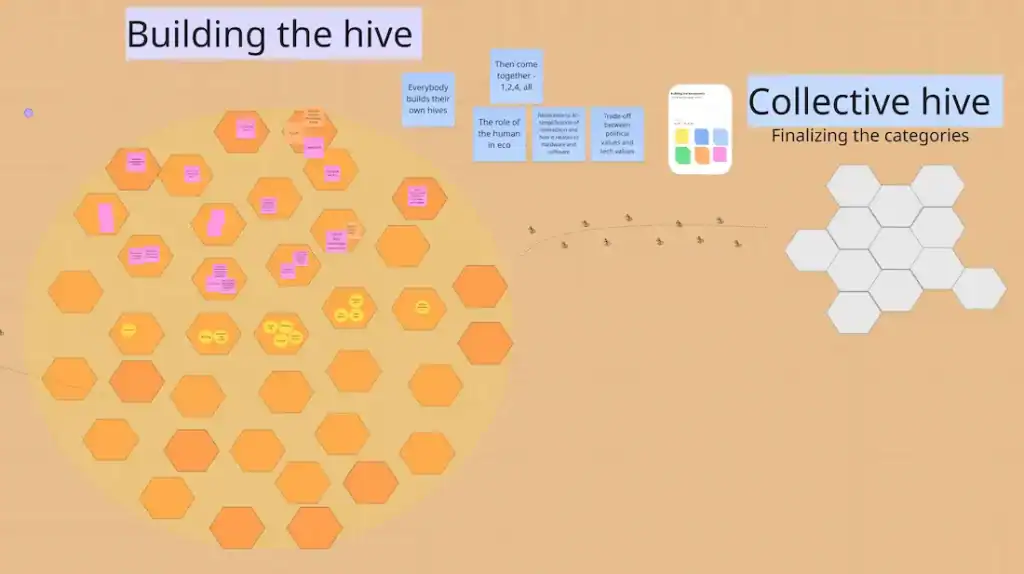
To conclude we held these categories up together. The initial constraint of 12 categories felt too small for the complexity we uncovered; we realised that the systems map must continue to expand, incorporating every variable that forms tech’s unsustainable path. The hive metaphor was our constant anchor, reminding us how quickly natural resilience succumbs to the forces of mass exploitation. This initial exploration will provide us with the systemic understanding of the problem’s scale and in turn helps us design fundamental solutions.
The hiving continues
CAT’s vision is a transformed tech industry that makes climate a priority, and takes responsibility for social impacts. We imagine a future where innovation and sustainability thrive together in the tech world, a future we can build, collaboratively. If you share this vision for a more sustainable future, join our ongoing exploration in the next workshop series. To participate, please RSVP via Luma. For any further details about the series, please contact Siddhesh Wagle.
References:
- [1] https://www.museumoftheearth.org/bees/evolution-fossil-record
- [2] https://www.weforum.org/stories/food-water-air/how-essential-are-pollinators-for-global-food-security/
Edited by: Sandra Pallier, Andy Davies
Acknowledgements: A special thank you to Jon Sleeper for generously agreeing to co-facilitate the workshop. His coaching expertise was instrumental in making the workshop even more impactful. I would also like to express my sincere appreciation to Sandra Pallier for her help with the series planning and logistics.